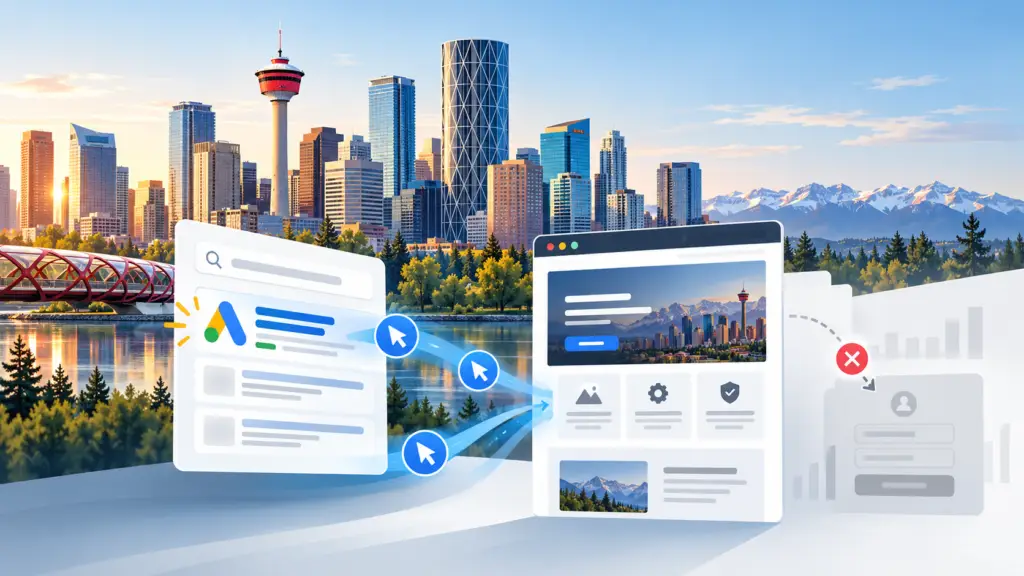
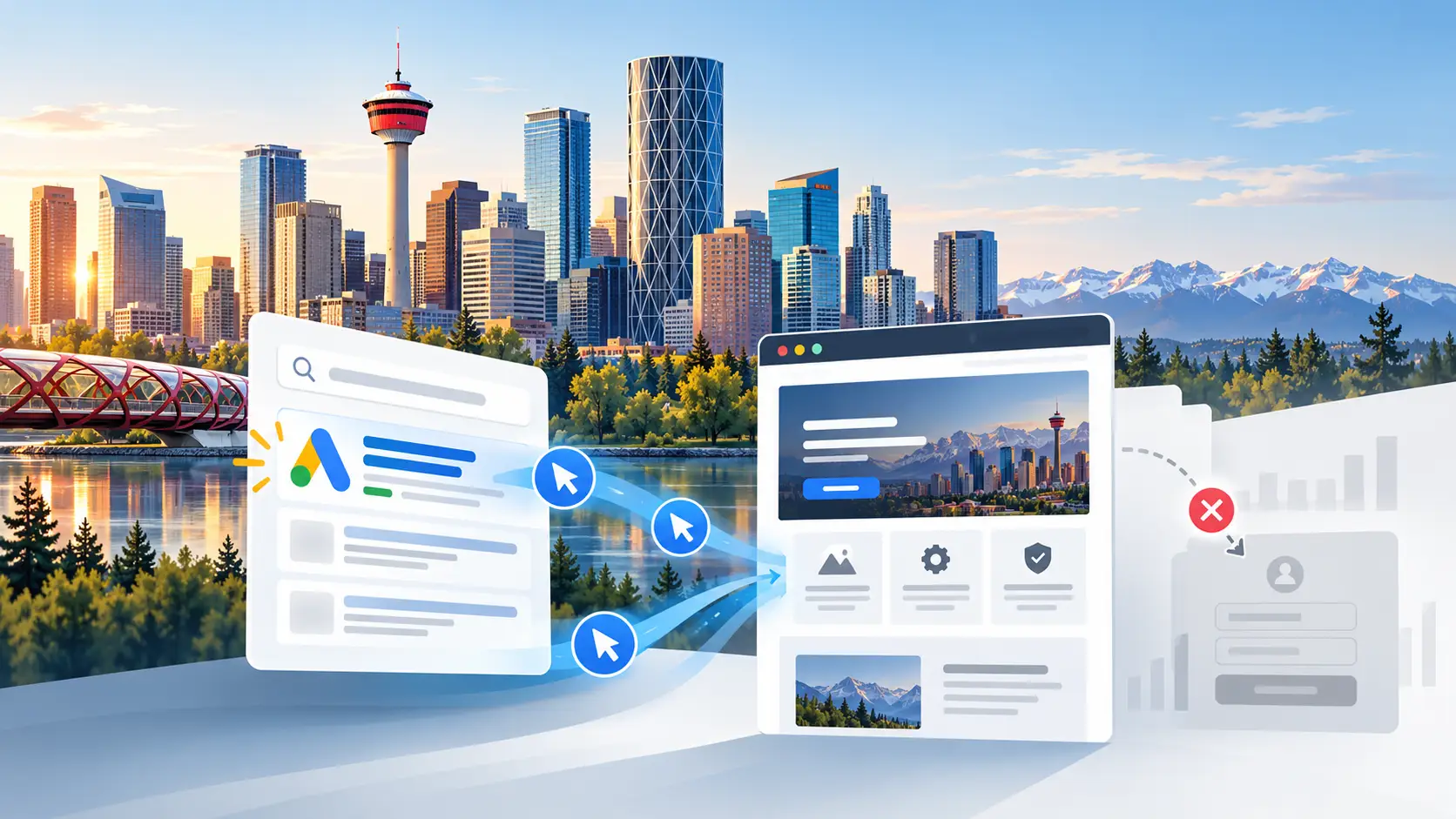
Google Ads should create opportunities — not just clicks.
Calgary businesses often assume weak PPC results mean they need more budget. In reality, the problem may be somewhere else in the customer journey — search intent, landing pages, conversion friction, tracking or follow-up.
Getting the click is only one step. The system around the campaign determines whether that click becomes a real customer.
Google Ads can put your business directly in front of people searching for the services you provide. But many campaigns look healthy at the traffic level while still failing to produce enough qualified leads.
When that happens, buying more clicks may simply send more people into the same broken journey.
Most PPC problems are not isolated to the ad account.
A campaign can target the right market and still underperform because the landing page creates friction, tracking is incomplete or the lead sits untouched after submitting.
Your keywords are bringing the wrong people.
Relevant traffic is not always commercially useful traffic.
A keyword may look related to your service while still attracting people who are researching, job hunting, looking for DIY information or comparing options without any immediate purchase intent.
The searcher is primarily learning.
The searcher is much closer to choosing a provider.
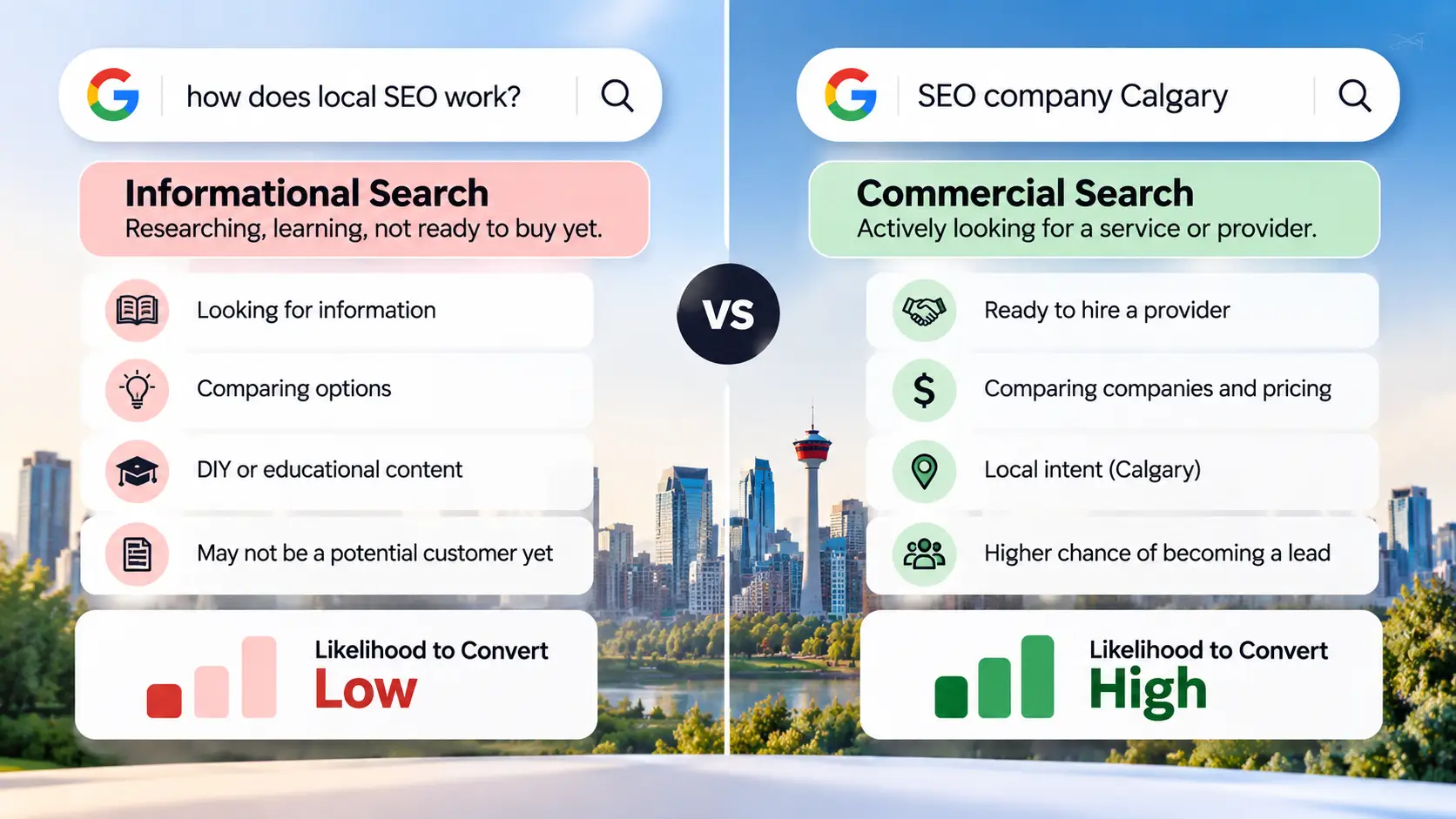
Prioritize intent, not just keyword relevance.
Campaign structure, negative keywords, match types and search-term reviews should help shift more budget toward searches that are actually connected to a buying decision.
The ad promises one thing. The page delivers something else.
That disconnect creates friction immediately.
One of the most common mistakes is sending every paid-search visitor to the homepage.
Match the serviceReinforce exactly what the visitor searched for.
Match the locationMake Calgary relevance obvious where it matters.
Match the next stepGive the visitor one clear conversion path.
The ad and landing page should feel like one experience.
If you advertise web development in Calgary, the landing page should immediately communicate the service, local relevance, value and next action.

The page gives visitors too many decisions.
A good website can still be a bad paid-traffic destination.
Competing navigationDo not force visitors to explore the whole site.
Unrelated offersKeep the page focused on the intent behind the click.
Primary actionMake the next step immediately obvious.
“Learn More” does not tell the customer what happens next.
Specificity reduces uncertainty.
No clear outcome.
The visitor understands the next step.
Your first form should start the conversation — not finish the sales process.
Collect what you need to move the opportunity forward.
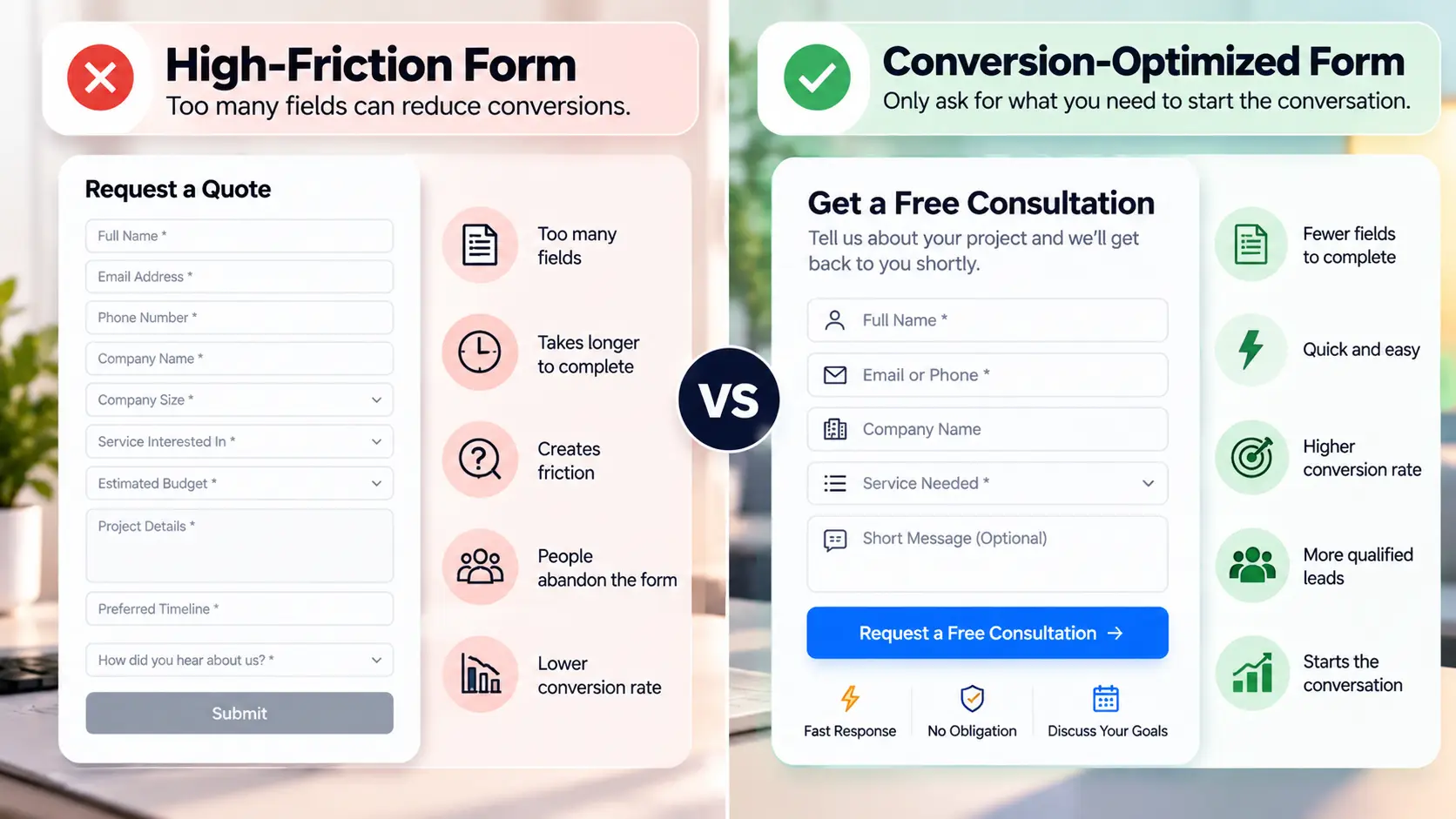
Long forms can create unnecessary resistance before the prospect has enough trust or commitment to provide detailed information.
Name · Email or Phone · Company · Service Needed · Short Message
Qualification can continue after the enquiry is captured.
Your desktop page may look great while mobile visitors quietly leave.
Local search often happens when the customer wants to act quickly.
Easy to useReadable text, tappable buttons and clean spacing.
Fast to loadLarge assets should not delay the first useful action.
Easy to convertCalling, booking or submitting should be straightforward.
Clicks tell you traffic happened. They do not tell you the campaign worked.
The useful metric is what happened after the click.
Track calls, form submissions, bookings, qualified leads and actual sales. A campaign that looks expensive at the click level may still be the campaign producing the best customers.
The lead converted. Then the process stopped.
This is where otherwise successful campaigns often lose value.
Paid advertising does not end when someone submits a form. The next step should be defined: capture the enquiry, route it properly, acknowledge the customer and make sure the correct person knows what to do next.
Use workflows for repetitive actions. Use AI where understanding or conversation genuinely adds value. Escalate to a human when a person should take over.
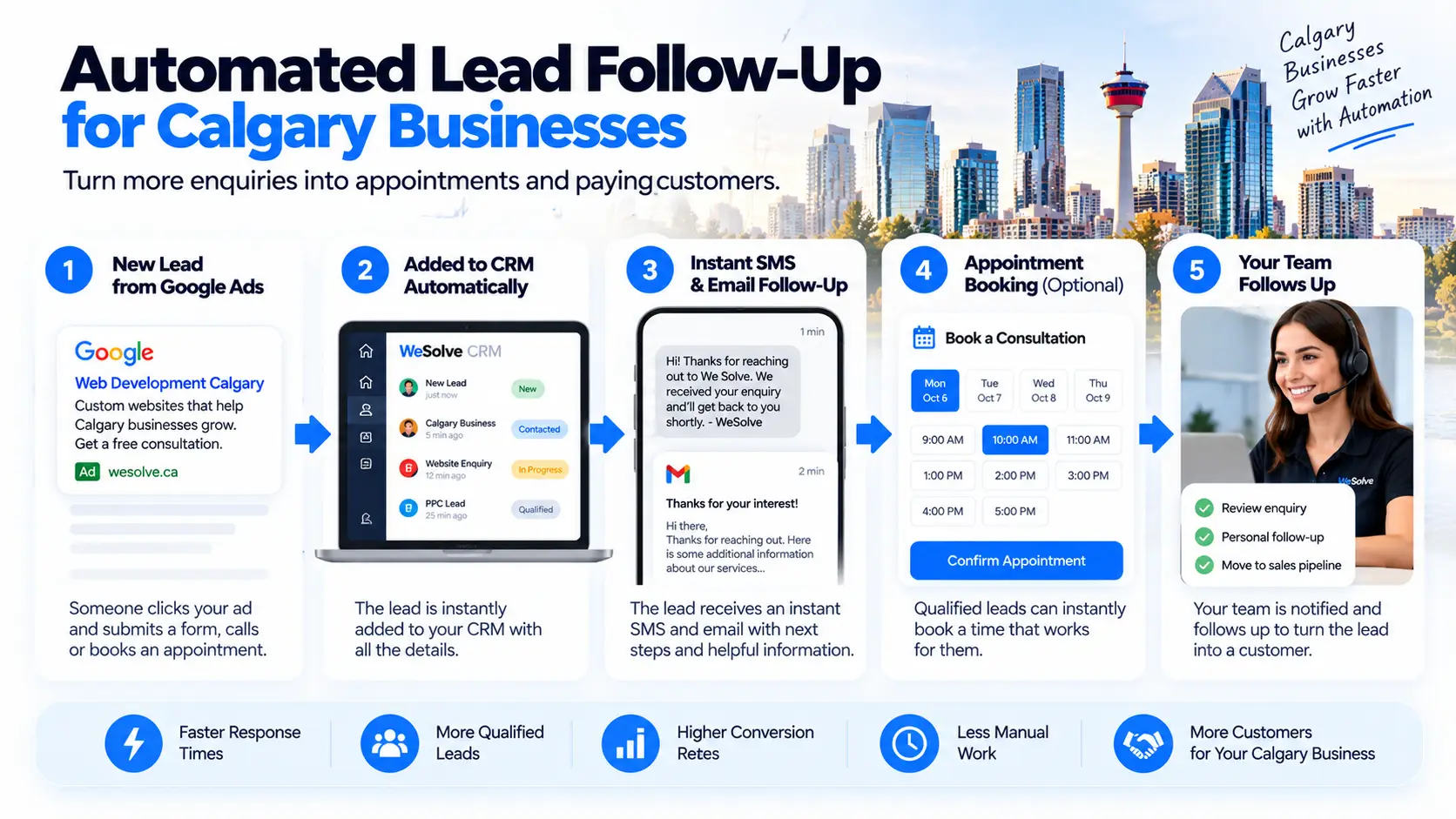
The campaign, website and follow-up should not operate as separate projects.
The customer experiences one journey.
A strong ad can still fail if the landing page is weak. A good landing page can still fail if the form creates friction. A completed form can still fail if nobody responds.
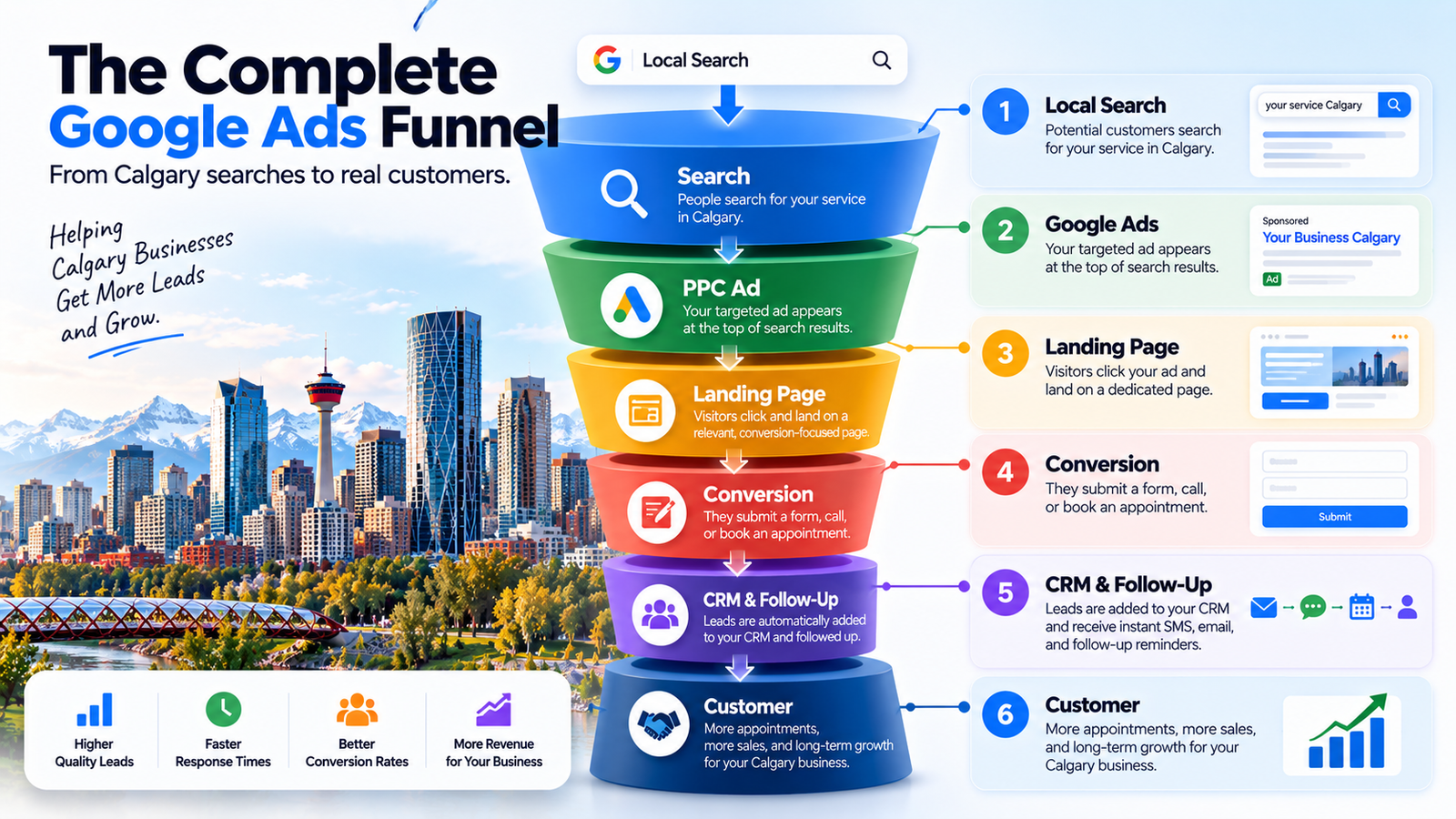
Your market matters. Local PPC should reflect how Calgary customers actually search.
Calgary businesses often serve broad geographic areas, but that does not mean every location deserves equal budget. Campaign targeting, landing-page language and service areas should match the markets the business actually wants to serve.
The objective is not to stuff “Calgary” into every keyword. It is to align location targeting, search intent, landing-page content and the offer with the way real customers look for the service.
Paid search should also support a broader Calgary local SEO strategy rather than replacing it.
Audit the customer journey first.
If clicks are coming in but qualified leads are not, review the system before assuming more budget is the answer.
Search terms
Keyword intent
Ad-to-page consistency
Landing-page conversion
Mobile usability
Form completion
Call tracking
Conversion tracking
Lead-response time
CRM follow-up
Better Google Ads results often come from improving what happens around the ads.
Strong PPC performance depends on more than bid strategy and ad copy. Search intent, landing pages, conversion design, tracking, CRM and follow-up all influence whether paid traffic becomes revenue.
If your Calgary campaigns are producing traffic without enough qualified enquiries, look for the bottleneck before increasing spend.
Show us where leads are getting stuck.
We Solve Digital looks at the full journey — advertising, websites, conversion, CRM, automation and the handoffs between them — then builds around the problem that actually needs to be solved.